
How your baby grows in the third trimester
Week 24 of pregnancySeen here at six months, the unborn child is covered with a fine, downy hair called lanugo. Its tender skin is protected by a waxy substance called vernix. Some of this substance may still be on the child’s skin at birth at which time it will be quickly absorbed. The child practices breathing by inhaling amnionic fluid into developing lungs. |
 |
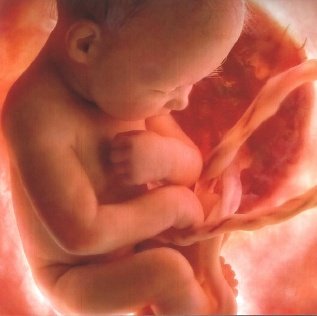
Week 30 of pregnancyFor several months, the umbilical cord has been the baby’s lifeline to the mother. Nourishment is transferred from the mother’s blood, through the placenta, and into the umbilical cord to the fetus. If the mother ingests any toxic substances, such as drugs or alcohol, the baby receives these as well. |
 |
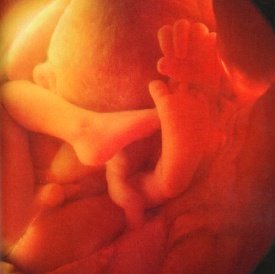
Week 32 of pregnancyThe fetus spends 90-95% of the day sleeping, and sometimes experiences REM sleep — an indication of dreaming. Week 36 of pregnancyDevelopment is almost complete and the fetus just takes this time to grow. |
 |
 |
 |
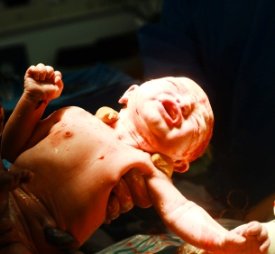
Week 40 of pregnancyThe baby, now approximately seven and a half pounds, is ready for life outside its mother’s womb. At birth the placenta will detach from the side of the uterus and the umbilical cord will cease working as the child takes his first breaths of air. The child’s breathing will trigger changes in the structure of the heart and bypass arteries which will force all blood to now travel through the lungs. |
 |
 Go back to 2nd Trimester | Go to Labor and Delivery
For more information on fetal development check out our pregnancy videos.

